
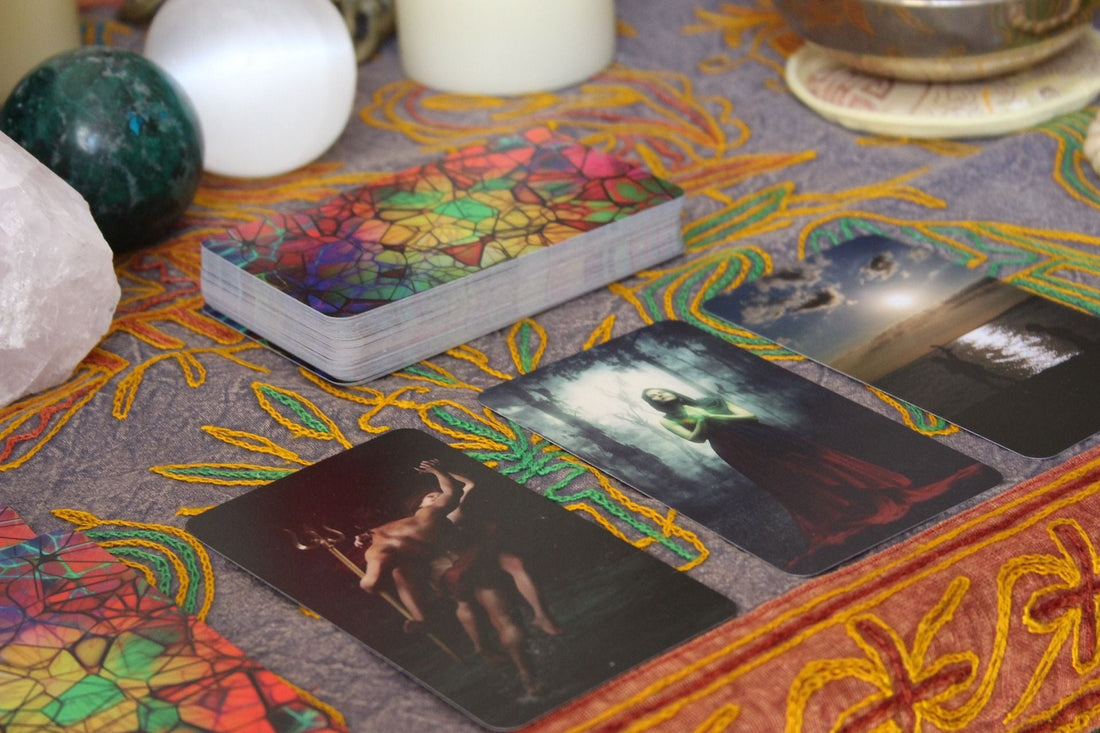
Understanding the Major Arcana: The 22 Archetypes of Tarot
Share
Quick Answer
The Major Arcana is the set of 22 numbered archetype cards in a tarot deck — The Fool (0) through The World (21). They represent life's big themes and turning points rather than daily events, and together they form "The Fool's Journey," a story arc from innocence to completion. And no — the Death card almost never means literal death. It means an ending that makes room for what's next.
The Major Arcana cards are the ones everyone recognizes — The Tower, The Lovers, Death — and the ones Hollywood loves to flip dramatically in candlelit scenes. Behind the drama, they're a remarkably practical system: 22 archetypes covering the arcs almost every human life moves through. Here's how they work, how to read them, and what the "scary" cards actually mean.
What is the Major Arcana?
The Major Arcana ("greater secrets") is the 22-card backbone of the 78-card tarot deck. Where the Minor Arcana reads daily life — work, money, relationships in motion — the Majors mark the deeper currents: identity, transformation, fate, awakening. When a spread comes up heavy with Major cards, experienced readers sit up, because the reading is pointing at a chapter, not a Tuesday.
What is the Fool's Journey?
The 22 cards read in order tell one story: The Fool — card 0, the open-hearted beginner stepping off the cliff — travels through every archetype and lesson until reaching The World, card 21, wholeness and completion. The arc breaks roughly into three acts:
- Cards 1–7 (The Magician through The Chariot) — building an identity in the outer world: skill, intuition, nurture, structure, tradition, love, willpower.
- Cards 8–14 (Strength through Temperance) — the inward turn: courage, solitude, cycles of fortune, justice, surrender, endings, balance.
- Cards 15–21 (The Devil through The World) — the deep work: confronting shadow and bondage, sudden upheaval, hope, illusion, clarity, awakening, integration.
You don't need to memorize this to read — but knowing where a card sits in the journey instantly tells you what kind of lesson it carries.
Does the Death card mean actual death?
Almost never — and this is the most misunderstood card in the deck. Death (card 13) is the archetype of necessary endings: a job that's over, a relationship completing its arc, an old identity you've outgrown. It clears the field. Readers who've worked with the deck for years tend to see Death as one of the most hopeful cards to receive, because it means the stuck thing is finally moving. If the card unsettles you when it appears, that reaction itself is information — it usually points straight at the ending you already know is coming.
What about The Tower and The Devil?
The other two cards people fear, and both are more useful than scary:
- The Tower (16) — sudden collapse of a structure built on a shaky foundation. It's disruptive, yes — and it's also the deck's honesty card: what falls in a Tower moment was already unsound. The lightning does in one strike what denial was postponing.
- The Devil (15) — not evil, but bondage you're participating in: addiction, a toxic dynamic, golden handcuffs, the story you keep telling yourself. Look closely at the classic imagery — the chains on the figures are loose. That's the whole message.
How do you read Major Arcana cards in a spread?
Three practical rules:
- Weight them. A Major card outranks the Minors around it — treat it as the theme the smaller cards are describing.
- Count them. Many Majors in one spread = a fated, significant season; mostly Minors = the situation is in your hands day to day.
- Watch for repeats over time. If the same Major keeps appearing across readings, that's the lesson currently on your desk. It stops appearing when it's learned — ask anyone who's been stalked by The Hermit for a month.
Frequently Asked Questions
How many cards are in the Major Arcana?
Is the Death card bad?
What does it mean when a reading has many Major Arcana cards?
What is the first card of the Major Arcana?
The Majors reward slow study — pull one each morning and sit with the imagery before checking any book. New to the deck entirely? Start with our beginner's guide to reading tarot, meet the four suits of the Minor Arcana, and find a deck whose Major artwork speaks to you in our tarot and oracle collection.