
Amethyst Crystal Properties: A Complete Guide to Healing and Benefits
Share
Amethyst is the stone most people start with, and the one serious collectors never stop buying. This guide covers what it is, what it's used for, the different types we stock at Sage & Magic, and how to pick a specimen you'll still love in ten years.
What Is Amethyst?
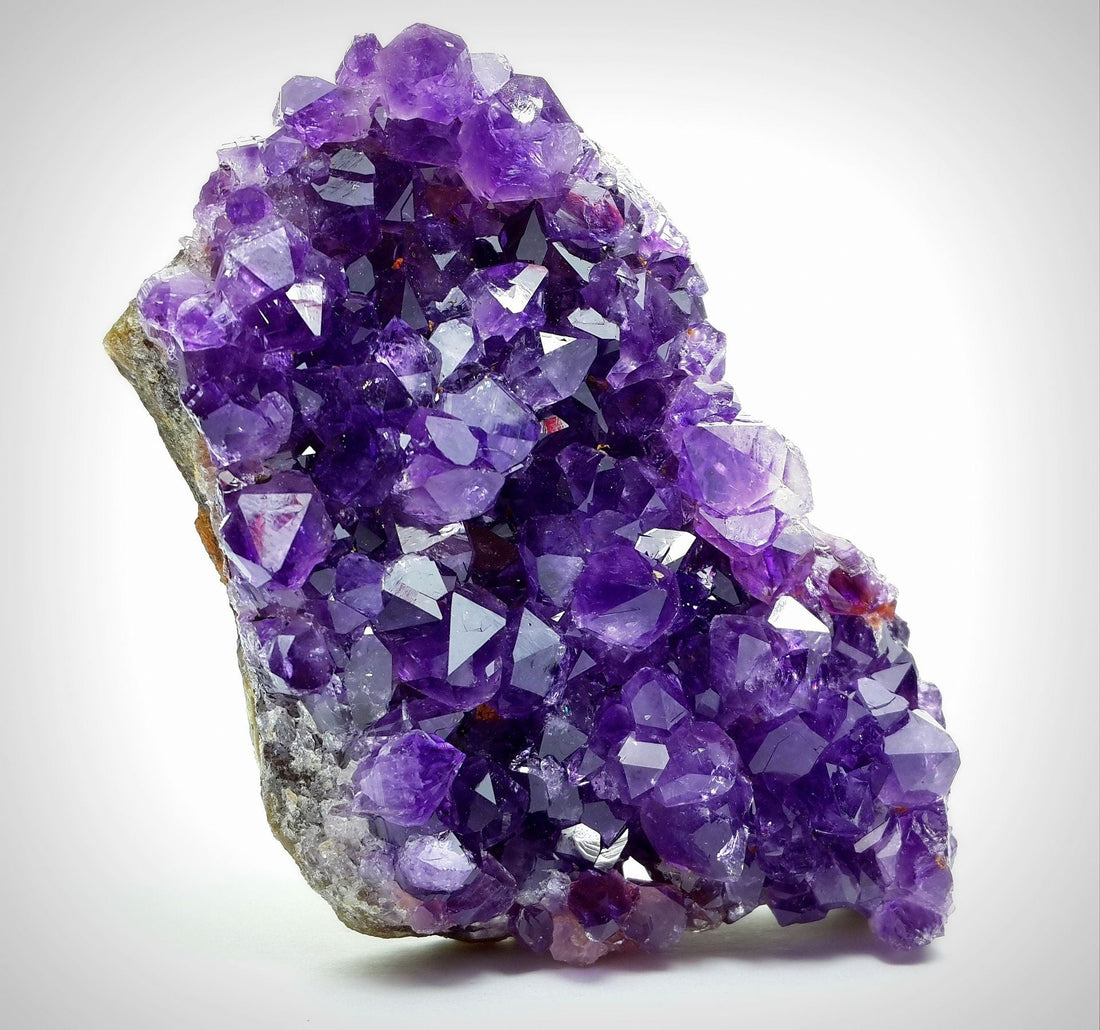
Amethyst is the purple variety of quartz. The color comes from trace iron in the crystal structure combined with natural irradiation in the ground — which is why saturation ranges from pale lilac to the deep grape-jelly purple collectors chase. It measures 7 on the Mohs hardness scale, hard enough for daily handling. Most fine amethyst on the market comes from Brazil and Uruguay, with Uruguayan material generally prized for darker, more saturated color.
Amethyst Meaning and Uses
Amethyst has been associated with calm and clarity for over two thousand years — the name comes from the Greek amethystos, "not intoxicated," because the ancients believed it kept the mind sober and steady. In modern practice, it's the go-to stone for:
- Sleep and rest — a cluster on the nightstand is the classic placement
- Meditation — associated with the crown and third eye chakras
- Stress relief — a palm stone or sphere as a touchstone during the workday
- Space clearing — larger clusters and caves anchoring a room's energy
The Types of Amethyst We Stock
"Amethyst" covers more ground than most people realize. Here's what actually comes through our shop:
- Classic purple amethyst — clusters, towers, spheres, and stalactite formations. Depth of color and clarity of the crystal points drive the price.
- Pink amethyst — a softer rose-lavender material from Patagonia, usually cut as freeforms and palm stones. It reads gentler than purple amethyst and pairs with rose quartz energy.
- Dream amethyst (chevron) — amethyst banded with white quartz in V patterns. We stock it as carved points, spheres, and figurines.
- Druzy amethyst — surfaces coated in fine sparkling crystal points, often on towers and hearts, sometimes growing with calcite or agate.
Every specimen in our Amethyst collection is one of a kind and photographed individually — the piece in the photo is the piece that ships.
How to Choose a Specimen
- Clusters and caves — best for display and space energy; look for undamaged points and even color
- Towers and points — directional, good for grids and altars
- Spheres — show banding and inclusions from every angle; the most forgiving form for imperfect material, which is why quality varies wildly between sellers
- Freeforms and palm stones — made to be handled; pink amethyst shines here
Caring for Amethyst
One thing many sellers won't tell you: amethyst fades in prolonged direct sunlight. The same irradiation that created the color can be undone by UV over months on a sunny windowsill. Display it out of direct sun, dust it with a soft brush, and rinse briefly in lukewarm water if needed — never hot, and skip harsh cleaners.
Shop Amethyst
Browse the full Amethyst collection — from small pink amethyst freeforms to statement pieces like druzy towers, stalactite clusters, and carved dream amethyst. For everything else in the case, start with our full crystal collection or the Unique Specimens gallery.